Clipboard Manager for Mac: A Five-Minute Privacy Audit
A practical Clipboard manager for mac guide covering setup, privacy, current Mac options, trade-offs and a safe test method.


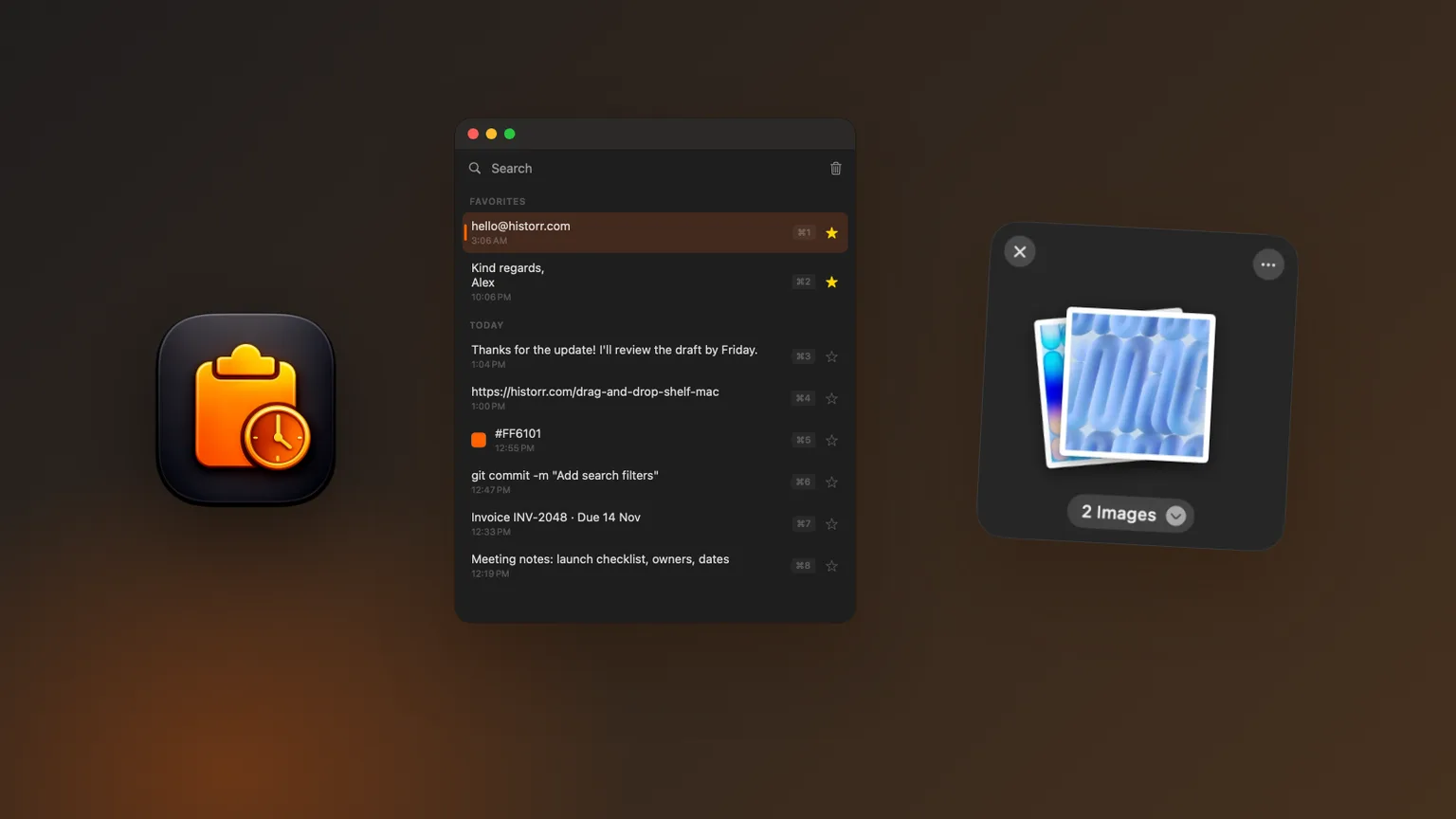
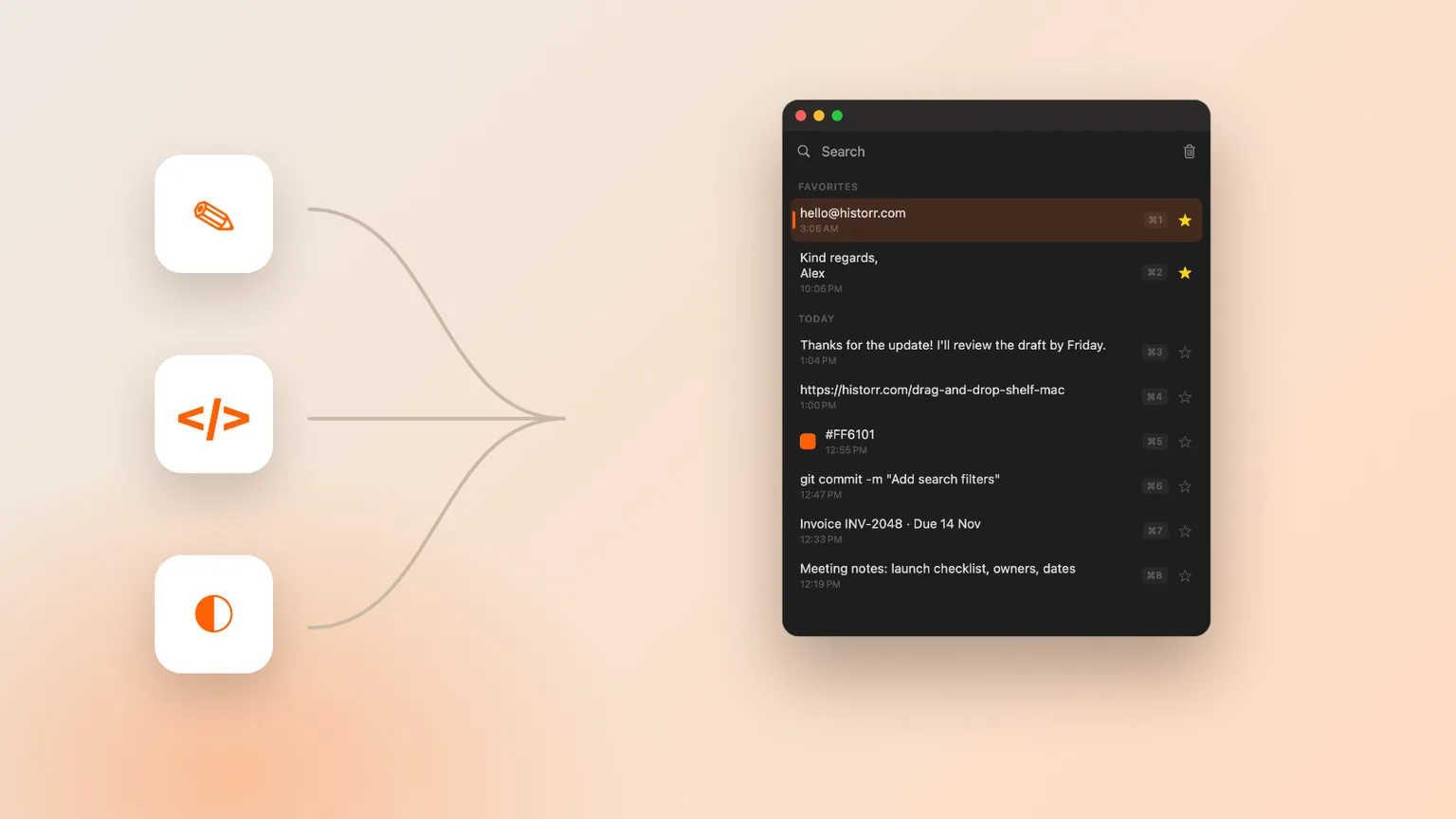
Historr editorial artwork using sample content; no private clipboard data is shown.
The short answerBefore trusting a Mac clipboard manager, verify storage, syncing, password-manager behavior, sensitive-item expiry, pause controls and complete deletion with synthetic test data.
The overview
A clipboard manager can encounter messages, addresses, code, account identifiers and secrets. A privacy audit asks where those clips go, how long they remain, what is excluded and whether you can pause or erase history without deleting unrelated files.
Do not rely on a general claim such as ‘private.’ Look for concrete behavior: local storage or named sync service, password-manager handling, configurable retention, sensitive-content expiry, telemetry disclosure and a visible clear action. Record the result so you can repeat the check after a meaningful app or operating-system update.
Why it happens
The current pasteboard, Apple’s Clipboard history and third-party history are separate layers. Replacing the current clip does not prove a saved history entry disappeared. Clear the recorder that actually stored it, then verify the result.
Historr documents local storage, no account or telemetry, automatic handling for concealed password-manager copies and optional sensitive-item expiry. Other apps have different designs, so check their current official documentation rather than assuming equivalent behavior.
Your step-by-step guide
Map storage and sync
Identify every device and service that can receive history. If the answer is unclear, pause before using the app with real work.
Use synthetic sensitive clips
Copy a fake one-time code, sample card-like number and invented token. Check what is stored, excluded or expired without risking a real secret.
Test pause and clearing
Pause recording, copy a distinctive phrase and confirm it does not appear. Resume, add a safe sample, clear it and search again.
Review permissions
Understand why the app requests Accessibility or other access. Historr records history without permission and uses Accessibility when it pastes into other apps.
Common mistakes to avoid
- Choosing from a feature count without testing a normal task.
- Using real credentials or private client data during evaluation.
- Running several clipboard recorders without knowing which one stores each clip.
Small changes. A faster workflow.
- Use the same synthetic text, URL, image and fake token in every comparison.
- Preview a result before pasting it into live work.
- Recheck official requirements and pricing before downloading or paying.
Compare your options
| Option | Best for | Limits |
|---|---|---|
| Apple Clipboard history | Occasional built-in retrieval on supported macOS | Availability and workflow depth depend on the system |
| Maccy | Minimal, open-source, keyboard-first history | Fewer workflow layers by design |
| Historr | Local text and image history with Paste Stack and Drag Shelf | Requires macOS 13 or later; Mac only |
Apple Clipboard history
Best forOccasional built-in retrieval on supported macOS
LimitsAvailability and workflow depth depend on the system
Maccy
Best forMinimal, open-source, keyboard-first history
LimitsFewer workflow layers by design
Historr
Best forLocal text and image history with Paste Stack and Drag Shelf
LimitsRequires macOS 13 or later; Mac only
Put it into practice with Historr
Historr is a free Mac clipboard manager that runs on macOS 13 Ventura or later on Apple silicon and Intel Macs. Its documentation says history stays local with no account, cloud history or telemetry. Concealed or transient password-manager copies are ignored, and optional sensitive-item expiry can remove content that resembles tokens, codes or payment details.
Press Option-H to open history, type to search, use the arrow keys and press Return to paste. Historr stores text and images, supports Quick Look previews, favorites and text transforms, and can queue values in Paste Stack for repeated ordered pasting.
Drag Shelf is included for temporary files, folders, links, images and text. Open it by shaking while dragging, pressing Option-Shift-D or dropping onto the menu-bar icon. That combined workflow is useful when copied content and dragged project assets move through the same task, but it does not replace cloud sync or a permanent document system.
- Instant search
- Unlimited history
- Favorites
- Keyboard shortcuts
- Privacy
- Offline storage
- Quick preview
- Paste Stack

Keep your next good idea.
Free, private clipboard history for your Mac.
Questions, answered.
Clipboard manager for mac?
Before trusting a Mac clipboard manager, verify storage, syncing, password-manager behavior, sensitive-item expiry, pause controls and complete deletion with synthetic test data.
Does macOS already include clipboard history?
Apple documents Clipboard history in Spotlight on supported current macOS releases. Availability depends on the system, while dedicated apps provide their own retention and workflow features.
What should I test before keeping a clipboard manager?
Test search, preview, pasting, clearing, pause behavior and sensitive-item handling with synthetic text, an image and a fake token. Confirm the result again after restarting the Mac.
Take it from here
Before trusting a Mac clipboard manager, verify storage, syncing, password-manager behavior, sensitive-item expiry, pause controls and complete deletion with synthetic test data. Use current official documentation, test with safe sample data and keep the app only when it solves the stated task more reliably than your existing workflow. Clipboard history is a convenience and recovery layer, not a permanent archive or password vault.
If you're looking for a faster way to search, organize, and reuse everything you copy, try Historr and see how much time you can save.
Continue with these guides
- Historr documentation
Verify shortcuts, privacy controls, images, Paste Stack and Drag Shelf.
- Clipboard privacy guide
Review local storage, exclusions, expiry and pause controls.