Clipboard Manager for Researchers: A Traceable Workflow
Quick Answer: A clipboard manager helps researchers recover quotes, DOI links, search terms, table values, and draft notes across browser, PDF, reference manager, and writing apps. It should support fast search, previews, favorites, and local storage. It complements a reference manager; it does not replace formal citations, source verification, or a durable research notebook.
What problem does clipboard manager for researchers solve?
A literature review may move through 4 or more surfaces: database, PDF reader, reference manager, and draft. Each copy can lose source context.
A searchable history reduces recopying, but every quote still needs a page number, URL, DOI, or record that proves where it came from.
Why do clipboard manager for researchers issues happen?
The clipboard stores content, not scholarly provenance. A copied sentence does not automatically carry the citation details needed later.
Researchers also compare many near-identical terms and abstracts, so a small preview can prevent the wrong fragment entering a draft.
How can you solve it step by step?
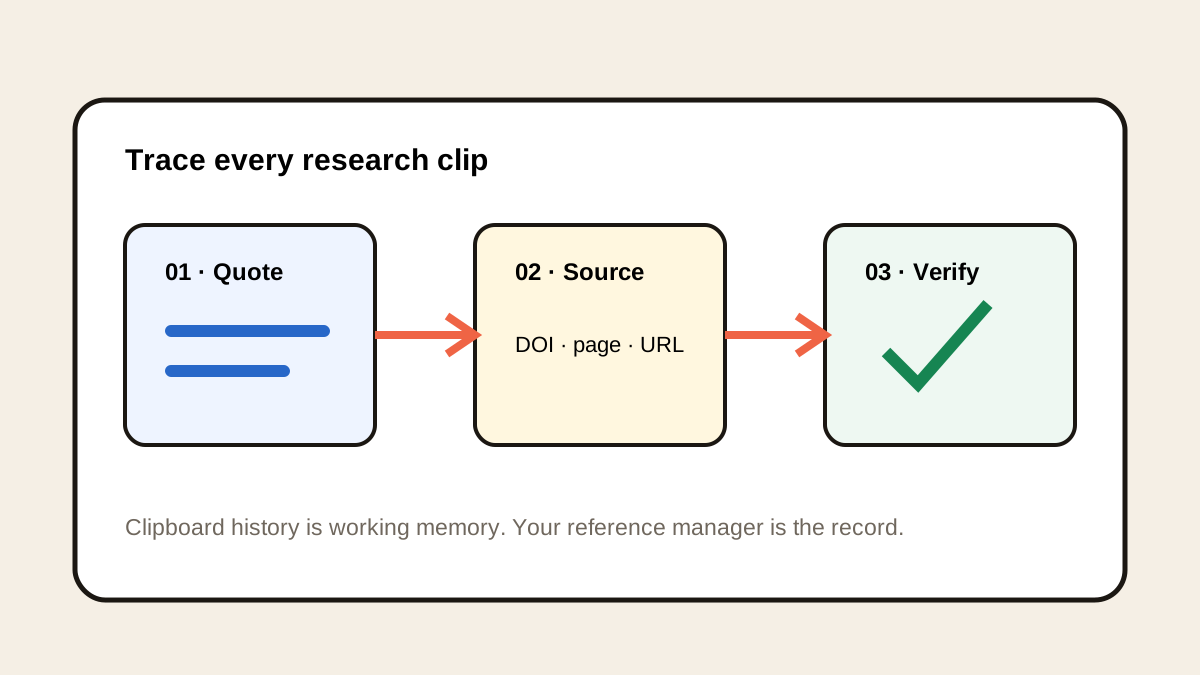
1. Copy the source marker first
Capture the DOI, stable URL, title, or citation record before copying the quote.
2. Keep quote and context together
Include the page number and a short note explaining why the passage matters.
3. Search by author or concept
Use a surname, DOI fragment, method, dataset, or distinctive phrase to recover a clip.
4. Promote verified material
Move confirmed quotes and citations into your reference manager or research notes.
Which common mistakes should you avoid?
- Treating clipboard history as a citation database.
- Saving a quote without page or source context.
- Copying restricted participant data into long-term history.
- Pasting table values without checking units.
Which expert tips make the workflow faster?
Comparison table for clipboard manager for researchers
| Option | Best for | Limits |
|---|---|---|
| Reference manager | Durable citations and bibliographies | Slower for temporary fragments |
| Research notebook | Analysis and decisions | Requires deliberate writing |
| Clipboard history | Cross-app capture and recovery | Does not prove provenance |
How does Historr make clipboard management easier?
Historr keeps copied research fragments local and searchable on your Mac.
Use Quick Look to inspect long excerpts, favorites for trusted database queries, and time groups to retrace a recent reading session.
Move anything citable into a durable reference system once you verify it.
What do people ask about clipboard manager for researchers?
Can clipboard history replace a reference manager?
No. It captures temporary working context; a reference manager stores verified citation records.
What should researchers favorite?
Database queries, search operators, recurring methods text, and safe reusable templates.
How do I keep quotes traceable?
Copy a DOI, stable URL, title, page number, or citation record with every important quote.
Is local clipboard history better for private research?
Local storage reduces unnecessary transfer, but confidential-data policies still apply.
What is the final verdict?
Use clipboard history as the short-term memory between research tools. Verified sources and conclusions belong in durable systems with clear provenance.
If you're looking for a faster way to search, organize, and reuse everything you copy, try Historr and see how much time you can save.