Turn Copied Reading Notes Into Useful Study Cards
Quick Answer: Use a copied passage as source material, then write a focused question and a short answer in your own words. Keep a source locator so you can check anything unclear.
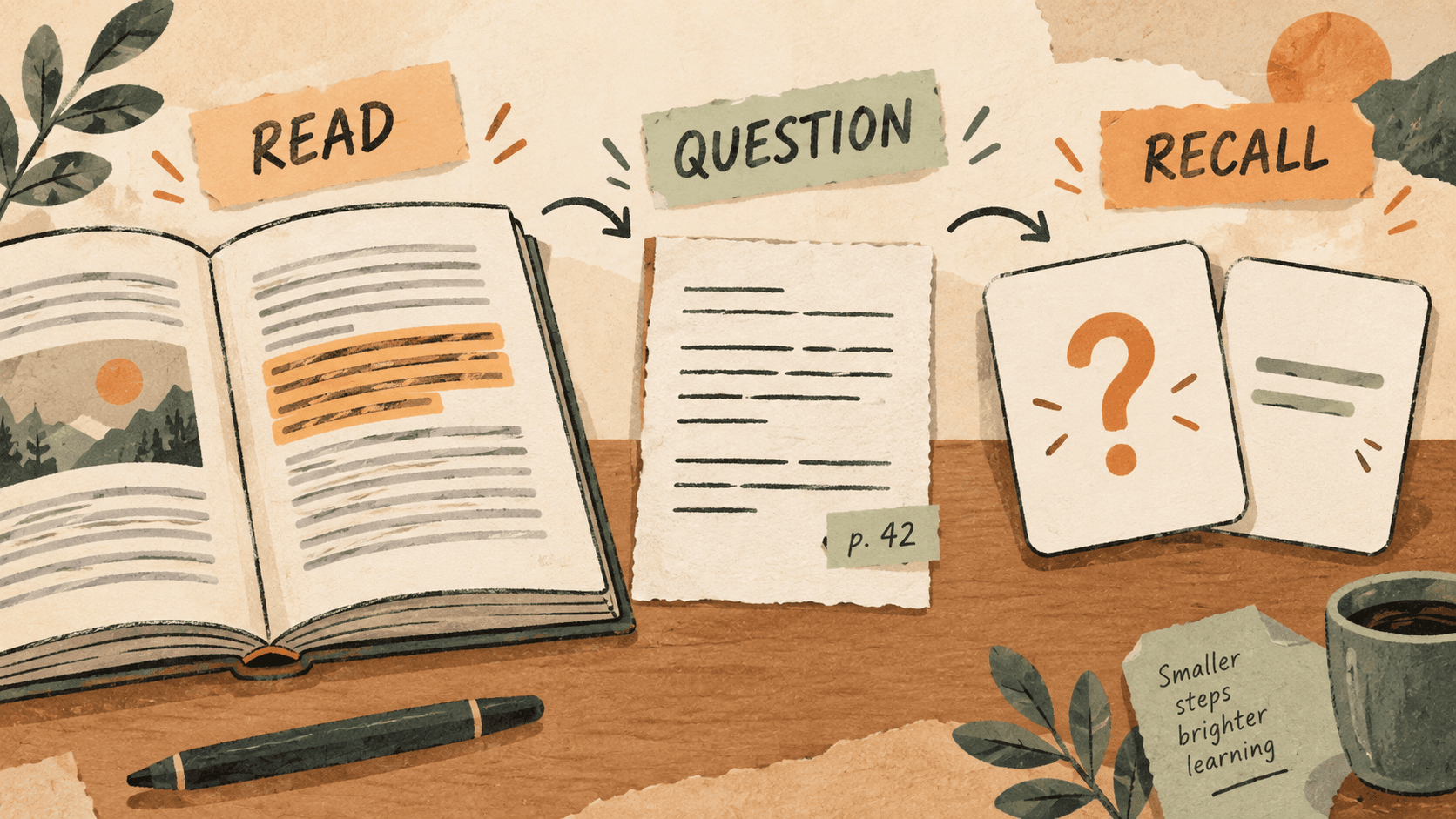
What problem does study card preparation solve?
A saved paragraph can feel like a completed study task even though it has not become something you can practice answering. Long copied passages also make flashcards difficult to review.
For a process with several stages, a single card asking “explain everything” may hide which stage you do not understand. Separate questions make the review task more specific.
Why do study card preparation issues happen?
Reading notes are organized around the source’s explanation. A study card needs to be organized around a question you can answer without seeing that explanation.
Copying from several chapters in one session can also separate an answer from its page number or section heading.
How can you solve it step by step?
1. Capture a passage with its location
Record the book or document title and page or section beside the excerpt. Clipboard history can help recover copied text, but add the source locator deliberately in your notes.
2. Choose one idea to ask about
Identify a definition, distinction, cause, or step. Write a question with a clear scope, such as Which step checks the input before the result is calculated? Avoid a prompt so broad that any answer feels acceptable.
3. Draft a short answer
Write the answer in your own words, then compare it with the source. If exact wording is required for your course, label that requirement rather than mixing a quotation with a paraphrase.
4. Separate examples from the core answer
Add an example as a supporting note when it helps. Do not let a long copied example obscure the answer you intend to practice. Split a card when it asks several independent questions.
5. Check and save the finished cards
Read each question without looking at its answer. Check that the answer actually addresses it and that the source locator is present. Put finished cards in the study tool you use for review.
Which common mistakes should you avoid?
- Pasting an entire paragraph as the answer to every card.
- Removing the context that makes a definition accurate.
- Treating the presence of a saved card as evidence you can answer it.
Which expert tips make the workflow faster?
Comparison table for study card preparation
| Option | Best for | Limits |
|---|---|---|
| Reading notes | Preserving explanation and context | Not always question-shaped |
| Clipboard history | Recovering copied excerpts | Does not organize review sessions |
| Study cards | Practicing focused questions | Need checked answers |
How does Historr make clipboard management easier?
Historr helps recover excerpts copied during a reading session. Quick Look is useful for confirming the full passage before turning it into a question.
Use Historr as a temporary collection aid. The final cards and any review schedule belong in your study system.
What do people ask about study card preparation?
Should a card answer be an exact quote?
Use the wording your course requires. Otherwise a checked paraphrase can make your understanding easier to inspect.
How much should one card cover?
Give it one clear question. Split it when the answer requires several unrelated facts.
Does Historr schedule flashcard reviews?
No review scheduling is part of this workflow. Use your study tool for that step.
What is the final verdict?
A useful study card begins with a specific question and a checked answer. Keep the original source close enough to resolve uncertainty when you review.
If you're looking for a faster way to search, organize, and reuse everything you copy, try Historr and see how much time you can save.