Turn Feedback Clips Into Actionable Tasks
Quick Answer: Keep feedback attached to its source, group similar observations, and write tasks around the problem to investigate or resolve. Separate a user’s observation from your proposed solution.
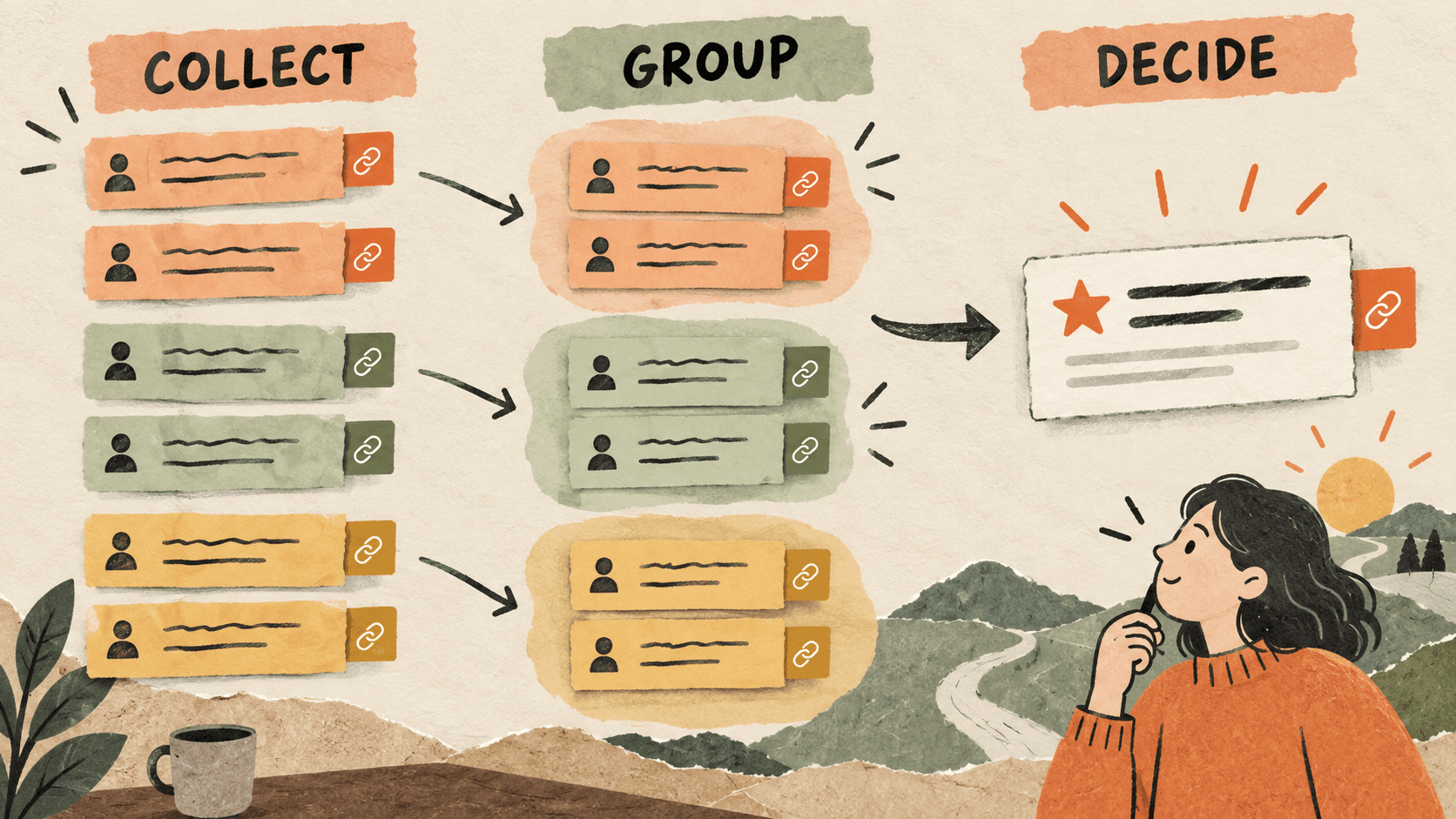
What problem does feedback triage organization solve?
Feedback arrives as chat messages, review comments, and support excerpts. A copied sentence such as “the search is confusing” is useful, but it needs context before it becomes a task.
Several similar comments may describe different situations. Grouping them too quickly can erase the detail that explains why each person struggled.
Why do feedback triage organization issues happen?
Copying often strips away the surrounding conversation. A request for a larger button might actually be about wording, placement, or an unexpected interaction.
A task drafted from the first proposed solution can skip the underlying problem and make later investigation harder.
How can you solve it step by step?
1. Capture the observation with context
Record the source reference, affected flow, and relevant conditions beside the excerpt. Keep only the personal details needed for your approved workflow. Label direct quotes separately from summaries.
2. Group by the experienced problem
Collect similar observations under a provisional theme. For example, group trouble finding saved items separately from trouble understanding search results. Keep the source reference on each note.
3. Separate evidence and interpretation
Write what was reported under Observation and your explanation under Hypothesis. Mark missing context as a question to investigate instead of treating it as a known cause.
4. Draft one bounded task
Describe the problem, the affected situation, and the intended outcome. Include supporting references and a way to check the result. If the cause is unknown, make the next task an investigation.
5. Review priority in the project system
Use the team’s normal triage process to decide what to do next. A large pile of copied comments is not by itself a reliable measure of unique users or severity.
Which common mistakes should you avoid?
- Counting duplicate copies as separate reports.
- Dropping source context when grouping comments.
- Writing a proposed solution as if the cause were confirmed.
Which expert tips make the workflow faster?
Comparison table for feedback triage organization
| Option | Best for | Limits |
|---|---|---|
| Feedback excerpt | Preserving a reported experience | May lack surrounding context |
| Theme group | Finding recurring problems | Can hide differences |
| Task record | Planning a bounded next action | Needs evidence and review |
How does Historr make clipboard management easier?
Historr search can retrieve copied comments, while Quick Look helps inspect longer feedback before summarizing it.
Use your approved feedback repository for the lasting record. Historr does not deduplicate reports, measure severity, or set team priorities.
What do people ask about feedback triage organization?
Should every feedback comment become a task?
No. First check context, duplicates, and whether an investigation or existing task already covers it.
Can I count matching clipboard entries as demand?
No. Copies may duplicate the same report and do not establish how many distinct people experienced a problem.
What makes a task actionable?
A specific problem, relevant context, a bounded next action, and a way to evaluate its outcome.
What is the final verdict?
Feedback becomes actionable when its context survives the move into a task. Preserve the evidence, label interpretations, and let the project process determine priority.
If you're looking for a faster way to search, organize, and reuse everything you copy, try Historr and see how much time you can save.