Clipboard Manager for UX Designers and Product Teams
Quick Answer: A clipboard manager helps UX designers recover hex colors, component names, prototype links, UX copy, research excerpts, and handoff notes across Figma, browsers, documents, and issue trackers. Use favorites for approved tokens and safe text patterns, search for temporary variants, and move validated decisions into the design system or research repository.
What problem does clipboard manager for UX designers solve?
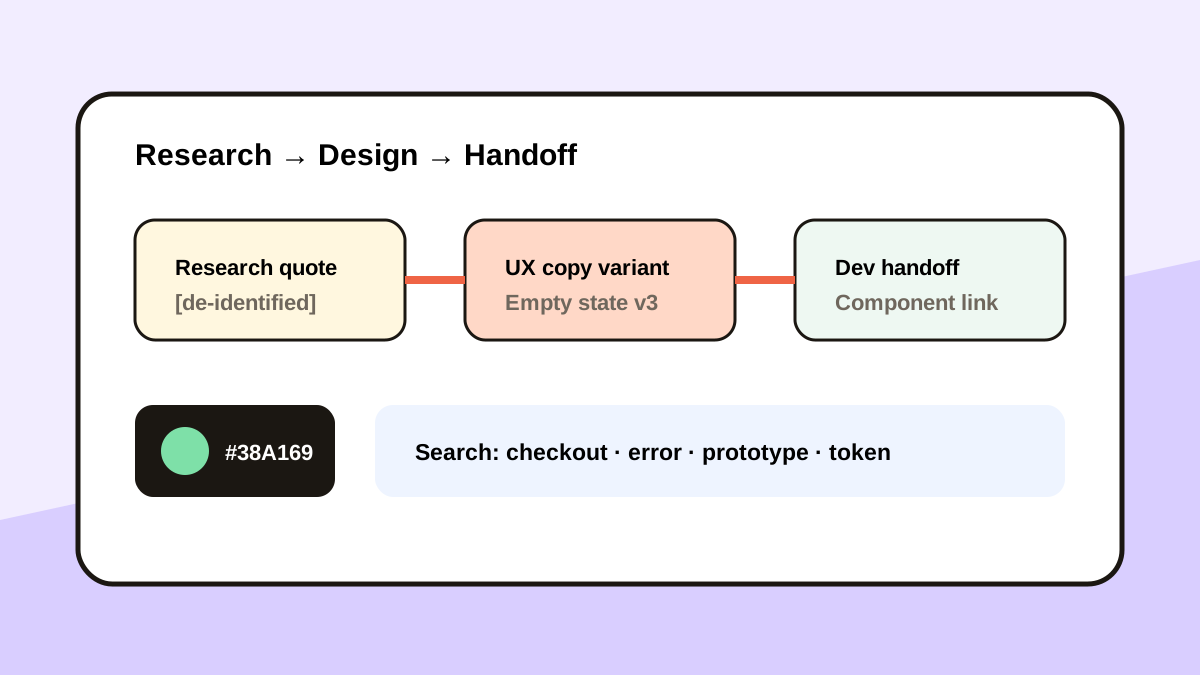
A UX workflow commonly crosses research notes, Figma, a browser, ticketing, and developer chat. One new copy can replace a valuable color, link, or text variant.
Research quotes also carry participant context and privacy risk, so temporary convenience needs firm retention rules.
Why do clipboard manager for UX designers issues happen?
Design tools optimize the canvas, not cross-app memory. Copied text and values leave the design file as soon as they move elsewhere.
Multiple variants may look similar in history, which makes preview and clear naming important.
How can you solve it step by step?
1. Favorite approved design values
Keep safe tokens, public links, component names, and approved UX writing patterns close at hand.
2. Search temporary variants
Find draft labels, error messages, empty states, and prototype links by a distinctive phrase.
3. Protect research data
Remove names and identifiers, and delete participant excerpts when policy requires.
4. Promote final decisions
Move validated copy and tokens into the design system, component library, or research repository.
Which common mistakes should you avoid?
- Using clipboard favorites as the official design system.
- Keeping identifiable participant quotes.
- Pasting an old prototype link into handoff.
- Reusing a hex value without checking its semantic token.
Which expert tips make the workflow faster?
Comparison table for clipboard manager for UX designers
| Option | Best for | Limits |
|---|---|---|
| Design system | Approved reusable decisions | Requires governance |
| Research repository | Traceable findings | Slower during active design |
| Clipboard history | Temporary cross-app values | Not a source of truth |
How does Historr make clipboard management easier?
Historr recognizes links, emails, and hex colors, including a live color swatch and Copy-as-RGB action.
Quick Look helps compare longer UX copy, while local search recovers prototype URLs and component notes.
Keep approved decisions in the design system and use Historr for the working path between tools.
What do people ask about clipboard manager for UX designers?
Can a clipboard manager store hex colors?
Yes. Historr can recognize hex colors, show a swatch, and copy them as RGB.
Should UX research quotes stay in history?
Only when policy allows it and identifiers are removed; delete sensitive excerpts promptly.
What should designers favorite?
Safe approved tokens, component names, public links, and reusable UX writing structures.
Can clipboard history replace a design system?
No. The design system remains the approved source of truth.
What is the final verdict?
Use clipboard history for motion between tools, not governance. Temporary values stay searchable; approved design decisions move into shared systems.
If you're looking for a faster way to search, organize, and reuse everything you copy, try Historr and see how much time you can save.