How to Set a Practical Clipboard Retention Policy
Quick Answer: A clipboard retention policy should define four things: which data may be captured, where history is stored, how long each data class remains, and who can delete or export it. Exclude credentials and regulated data by default, prefer local storage, use minutes for sensitive patterns, days for ordinary work context, and review exceptions regularly.
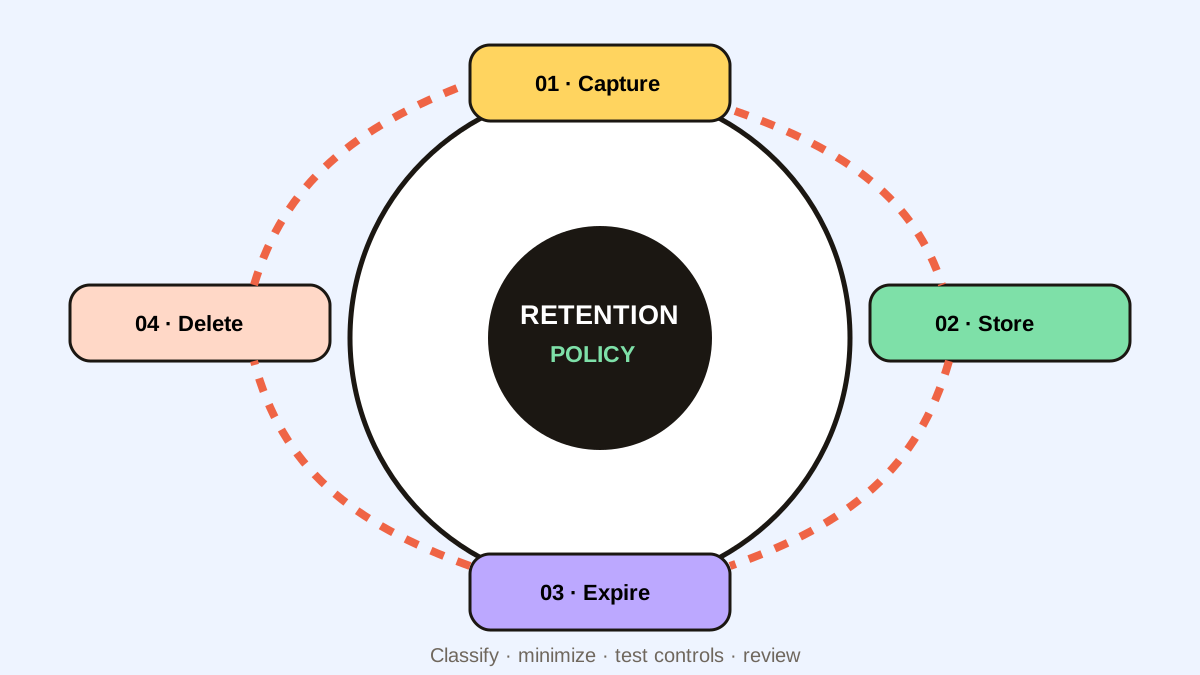
What problem does clipboard retention policy solve?
Automatic history can turn short-lived copy actions into a long-lived dataset. Without a policy, passwords, personal data, and internal documents may share one retention window.
A useful policy maps content to 4 lifecycle stages: capture, store, expire, and delete.
Why do clipboard retention policy issues happen?
Default clipboard managers optimize recovery, so they may keep more history than a regulated workflow permits.
Users also create favorites, which can bypass ordinary time-based cleanup unless the policy addresses them.
How can you solve it step by step?
1. Classify clipboard content
Separate prohibited secrets, sensitive short-lived data, ordinary work context, and approved reusable snippets.
2. Choose approved storage
Prefer local device storage unless a reviewed business case requires sync.
3. Set retention by class
Use no capture for credentials, minutes for one-time or sensitive patterns, and a limited number of days for ordinary context.
4. Define deletion controls
Require individual delete, Clear All, and predictable treatment of favorites and backups.
5. Review exceptions
Reassess app exclusions, sync, exports, and retention after workflow or policy changes.
Which common mistakes should you avoid?
- Using one unlimited window for all content.
- Allowing secrets into favorites.
- Ignoring copied images and files.
- Writing a policy without testing the actual app controls.
Which expert tips make the workflow faster?
Comparison table for clipboard retention policy
| Option | Best for | Limits |
|---|---|---|
| No capture | Passwords and prohibited data | No recovery |
| Short expiry | One-time and sensitive context | May disappear during long tasks |
| Limited history | Ordinary work context | Needs deletion controls |
How does Historr make clipboard management easier?
Historr is local-first and does not use an account, cloud sync, or telemetry.
It ignores password-manager copies, can auto-expire sensitive-looking items, and provides individual deletion, Clear All, and up to 10 levels of Instant Undo.
Match these controls to your organization’s data classes instead of relying on one default.
What do people ask about clipboard retention policy?
How long should ordinary clipboard history remain?
Keep it only as long as it supports the active workflow; many teams choose a limited number of days rather than unlimited storage.
Should passwords ever be retained?
No. Exclude password-manager copies and prohibit credentials from favorites.
Is cloud clipboard sync always unsafe?
No, but it adds systems and policy questions that need explicit review.
What deletion features matter?
Individual deletion, Clear All, defined favorite behavior, and verifiable removal are the minimum controls.
What is the final verdict?
A strong clipboard retention policy is short enough to follow and specific enough to test. Classify, store, expire, delete, and review.
If you're looking for a faster way to search, organize, and reuse everything you copy, try Historr and see how much time you can save.