How to Organize AI Coding Prompts Without Losing Context
Quick Answer: Organize AI coding prompts in three layers: keep stable instructions in repository guidance, save reusable task structures as snippets, and use clipboard history for temporary context such as errors, file paths, and draft prompts. Add clear placeholders, constraints, and acceptance criteria. Remove secrets, refresh stale assumptions, and review every generated change with tests.
What problem does organize AI coding prompts solve?
Developers copy prompts among editor, terminal, issue tracker, docs, and chat. The most useful version can disappear after one new copy.
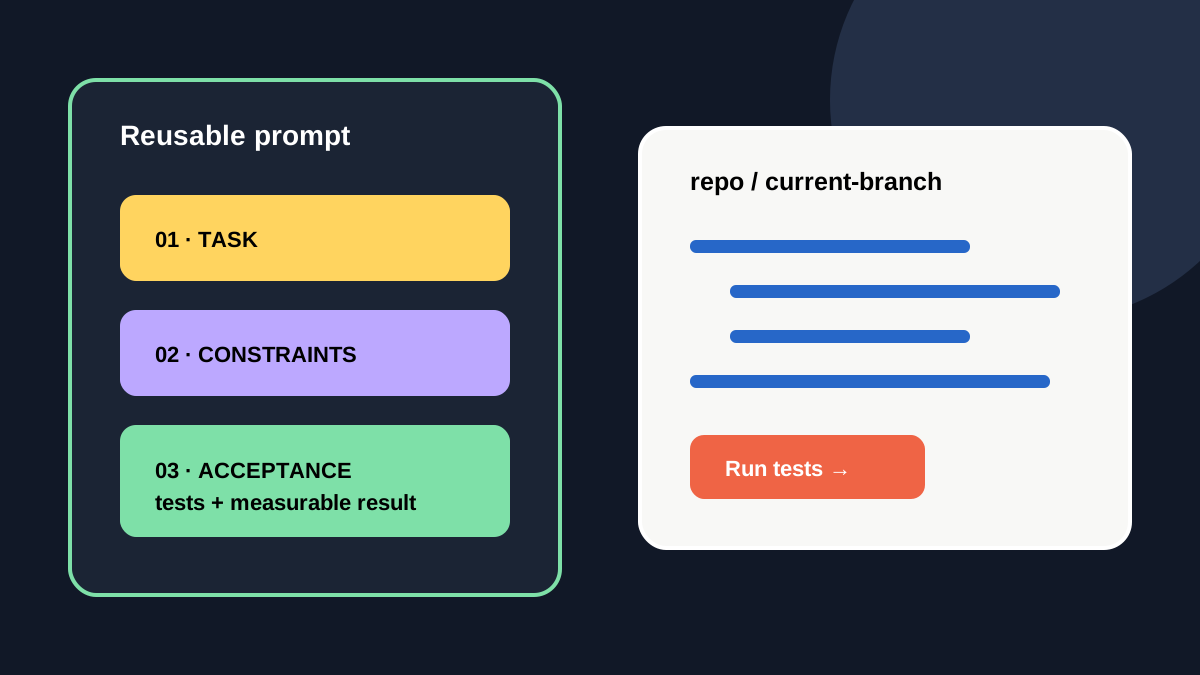
A prompt can include 3 clear parts—task, constraints, and acceptance criteria—while volatile logs and paths stay temporary.
Why do organize AI coding prompts issues happen?
Project facts change across branches and releases. A saved prompt that names an old file or API version can mislead the model.
Clipboard history is good at recovering drafts, while repo instructions and version-controlled templates are better for durable team rules.
How can you solve it step by step?
1. Separate stable and temporary context
Keep coding standards in the repository and current errors or paths in temporary history.
2. Build a three-part prompt
State the task, constraints, and acceptance criteria in separate blocks.
3. Use visible placeholders
Mark variables such as [FILE], [ERROR], [FRAMEWORK VERSION], and [TEST COMMAND].
4. Review and promote
If a prompt works across several tasks, move the stable structure into editor snippets or team docs.
Which common mistakes should you avoid?
- Saving API keys or tokens inside prompts.
- Reusing stale file paths and versions.
- Treating generated code as verified.
- Keeping team instructions only in personal clipboard history.
Which expert tips make the workflow faster?
Comparison table for organize AI coding prompts
| Option | Best for | Limits |
|---|---|---|
| Repository guidance | Stable team rules | Not ideal for temporary logs |
| Editor snippets | Reusable prompt structures | Needs deliberate maintenance |
| Clipboard history | Prompt drafts and live context | Can retain secrets |
How does Historr make clipboard management easier?
Historr keeps prompt drafts, error messages, code fragments, and documentation links searchable across apps.
Favorite only clean reusable structures, and leave branch-specific context in recent history.
Password-manager exclusions and sensitive expiry reduce risk, but you should still remove secrets before copying.
What do people ask about organize AI coding prompts?
Where should AI coding prompts live?
Stable team instructions belong in the repository; reusable structures fit snippets; temporary context fits clipboard history.
What makes a prompt reusable?
Clear placeholders, constraints, acceptance criteria, and no stale project-specific facts.
Should prompts include secrets?
No. Remove credentials, tokens, private keys, and sensitive production data.
Can clipboard history replace project documentation?
No. It is a personal recovery layer, not the team source of truth.
What is the final verdict?
Organize prompts by lifespan. Durable rules live with the code, reusable structures live in snippets, and temporary context stays searchable only as long as it remains useful.
If you're looking for a faster way to search, organize, and reuse everything you copy, try Historr and see how much time you can save.